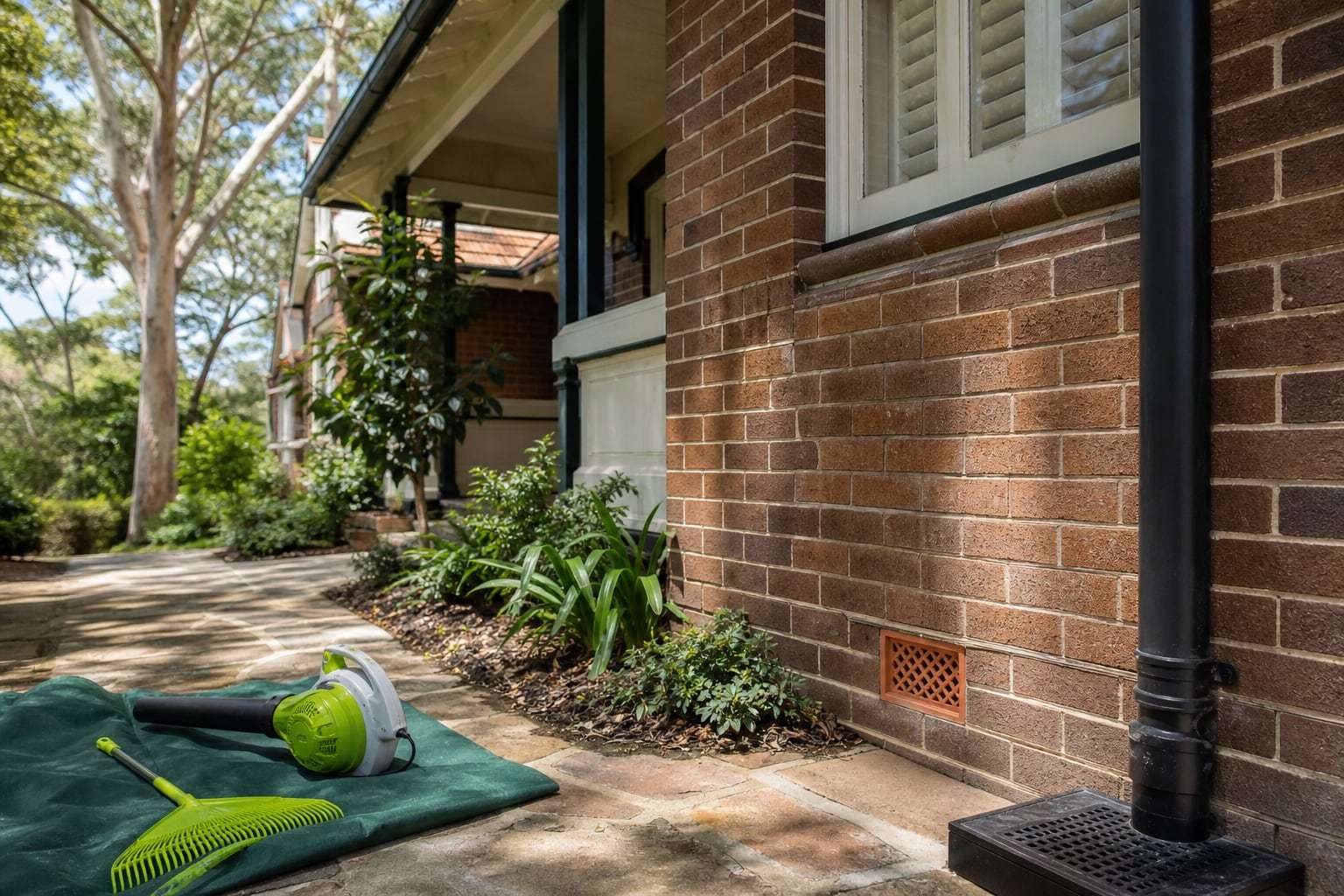
Mould Prevention North Shore
We fix what keeps the surface damp, so mould has nothing to grow on.
Mould prevention in North Shore homes is mostly a drying problem. Mould spores are always in the air, under big gums as much as anywhere. They only take hold where a surface stays damp, and leafy, shady blocks give them plenty of chances: walls that never see sun, gutters full of leaves, old pipes cracked by roots and crawl spaces with no air.
Clean the mould without fixing that, and it comes back. Fix the moisture, and it doesn’t. We do the second part; we don’t clean or remove mould ourselves.
Where the mould usually comes from
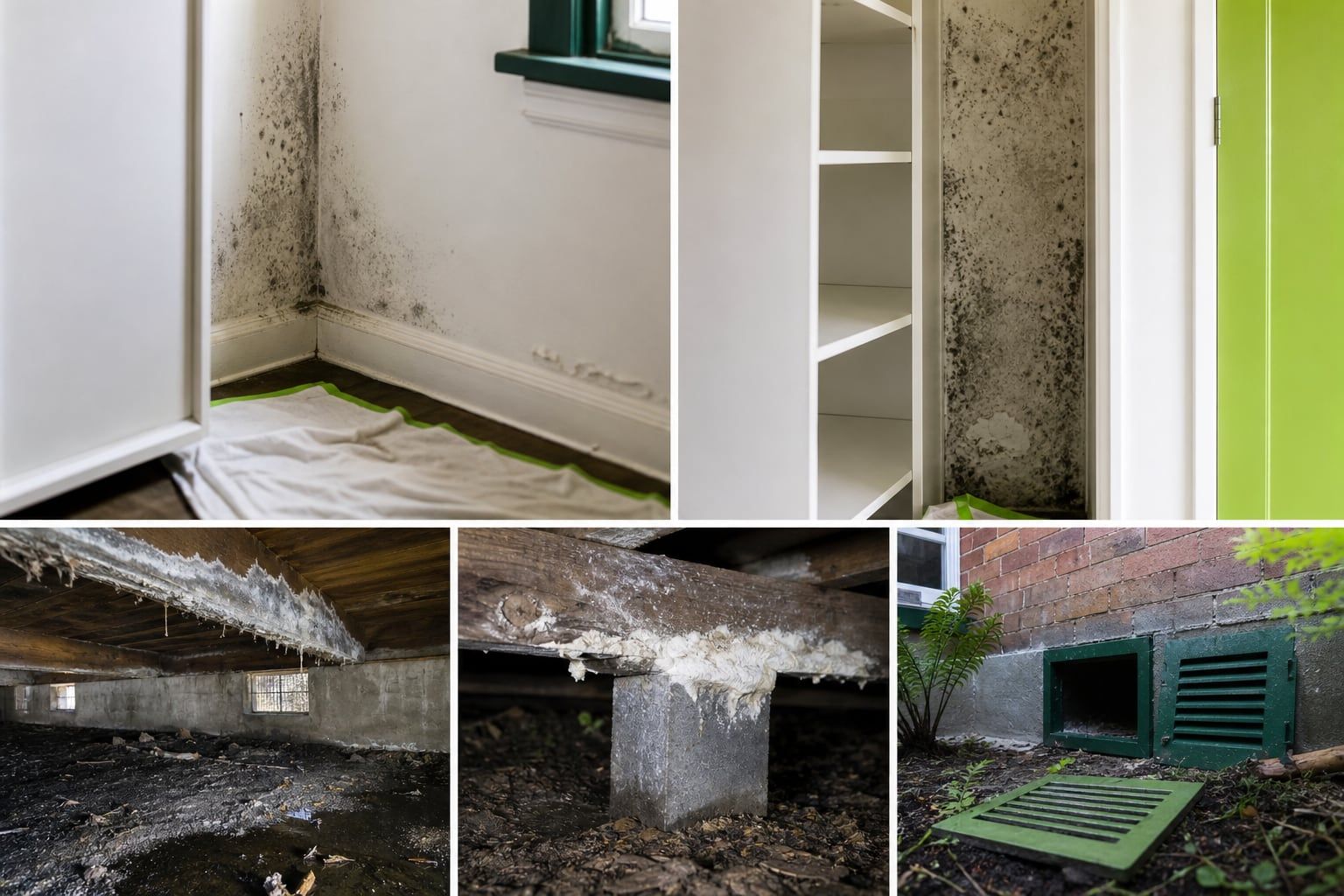
Shady, slow-drying walls. South-facing walls under heavy canopy can stay damp for weeks after rain. Mould shows inside on the same walls, low down and behind furniture.
Gutters and broken pipes. Leaf-choked gutters overflow down the wall, and root-damaged stormwater pipes soak the ground beside the footing. The damp spreads into the brick and the room behind it.
Failed damp courses. In Federation and inter-war houses, century-old slate or bitumen courses let water rise into the walls. Mould follows the damp band along the skirtings.
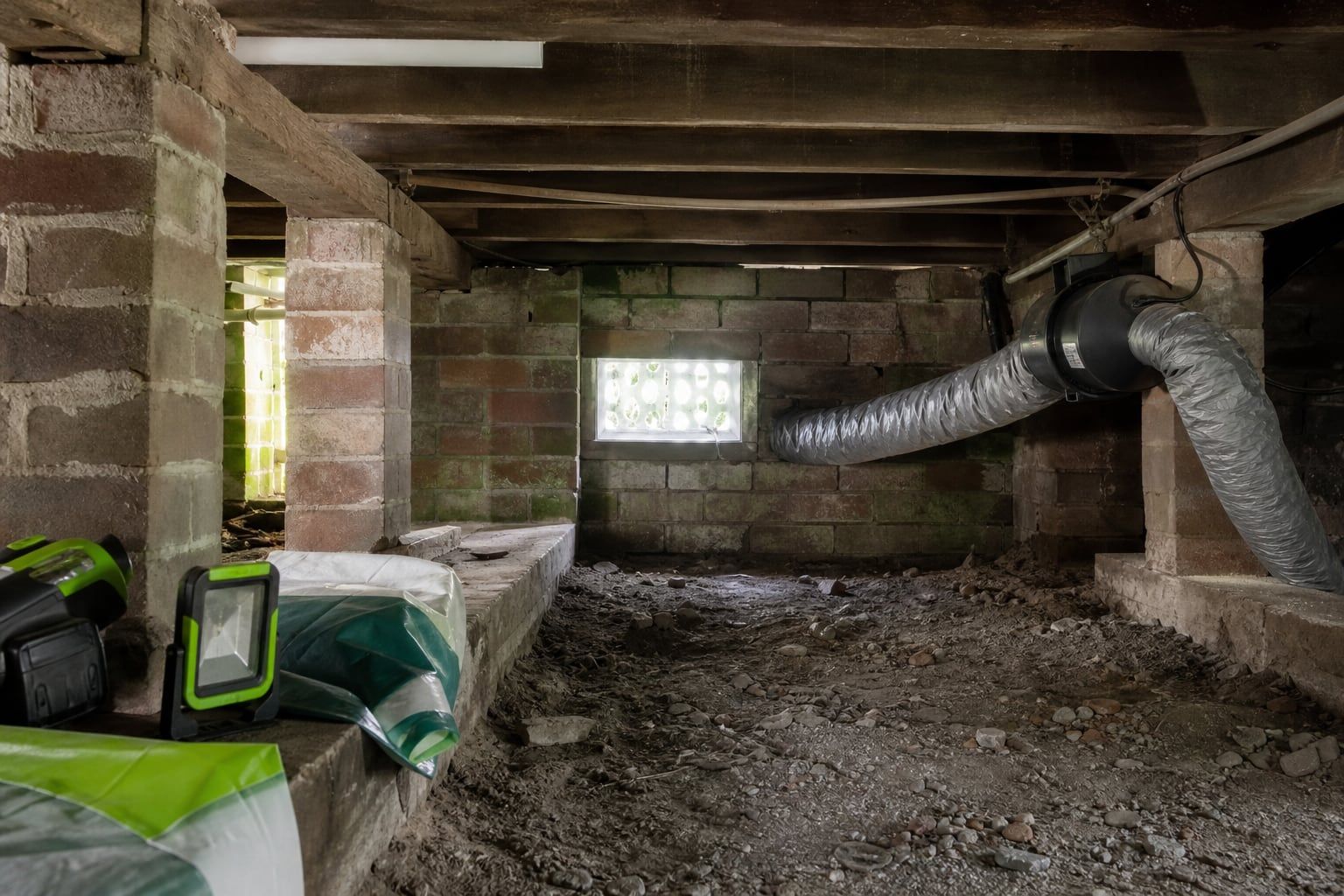
Still subfloors. Covered terracotta vents and clay soil keep crawl spaces humid, and the damp air comes up through the floor into cupboards and wardrobes.
Condensation. Older bathrooms and laundries without exhaust fans, and cold bedrooms with closed windows, can grow mould from air moisture alone.
How we deal with it
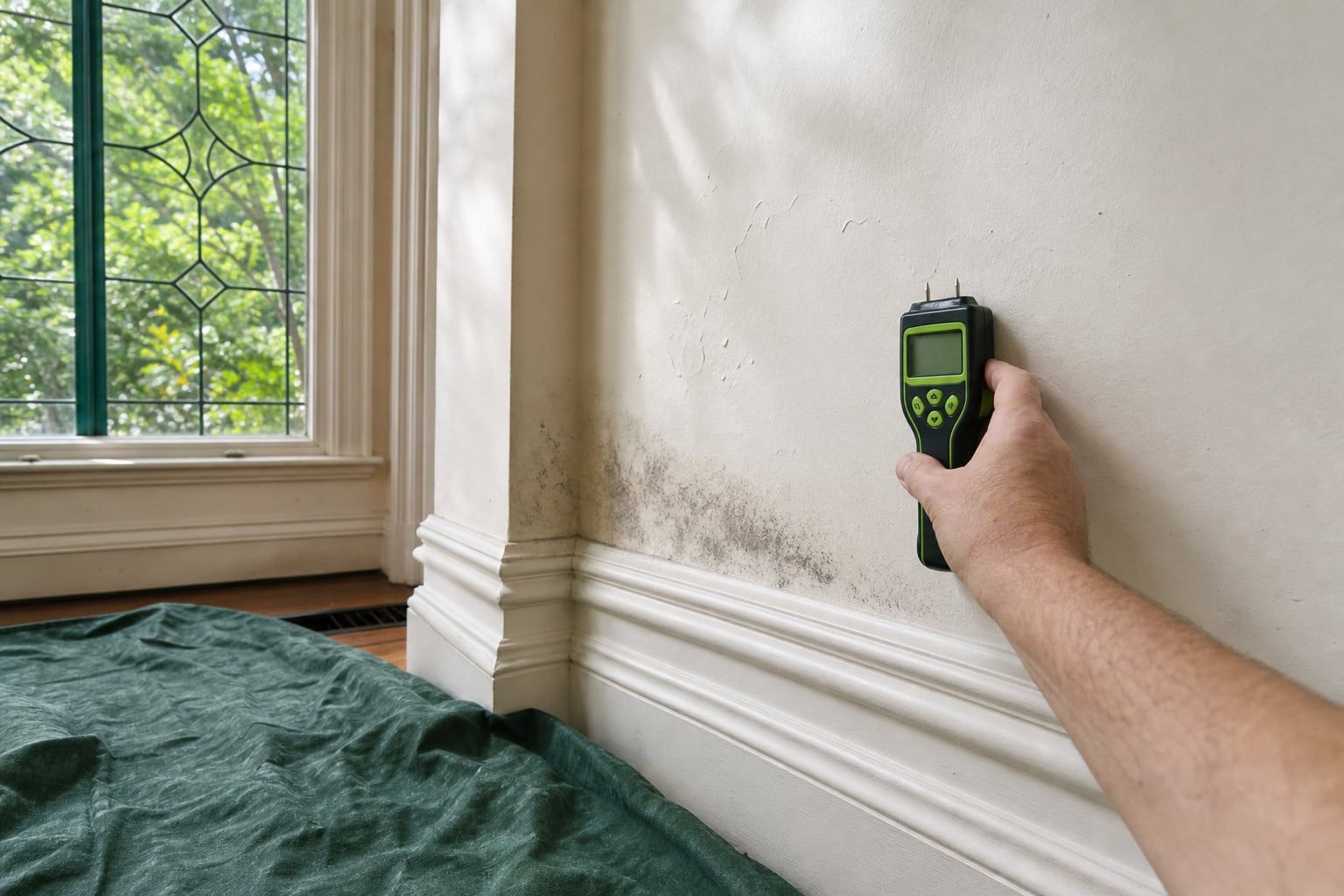
It starts with a free survey: readings around the mould and on nearby walls, plus a check of gutters, drains, garden beds and the subfloor. Our damp inspection page explains what’s covered.
Then we fix the source:
- Underfloor ventilation for crawl spaces that can’t breathe, with period-style vents or quiet fans.
- Damp wall drainage where the ground, a slope or broken pipes keep the wall wet.
- A new damp course where the survey confirms rising damp.
- Simple fixes where they’re enough: gutter guards, connected downpipes, lowered garden beds.
After the damp is fixed
Once the walls and floor are drying, existing mould can be cleaned and stays gone. Use a cleaner or remediation specialist for heavy or widespread growth. Where plaster has broken down, our damp plaster repairs replace it with a breathable finish.
Everyday habits that help
Run exhaust fans, open windows on dry days, keep wardrobes and beds a hand’s width from external walls, and clear gutters after autumn and storms. They help with condensation and overflow, but they won’t stop mould fed by a damp wall or crawl space.
Why leafy blocks are prone to it
Heavy canopy keeps sun off walls and roofs, keeps the air under the trees still and humid, and drops leaves that hold water against the base of the house. None of that is a reason to lose the trees. It just means drainage, gutters and airflow matter more here than on an open block, and a house that would shrug off a wet week elsewhere can stay damp for a month. Fixing those three things is usually what breaks the mould cycle.
Period homes
In older houses we use methods and finishes that suit original fabric, including breathable renders that let walls dry rather than trapping moisture behind them. Our guide to damp in Federation homes explains why that matters for mould as well as damp.
Book a survey
If mould keeps returning in the same spot, something is keeping it damp. We’ll find it. See our overview of North Shore rising damp for how we work.
Updated
What good mould prevention looks like
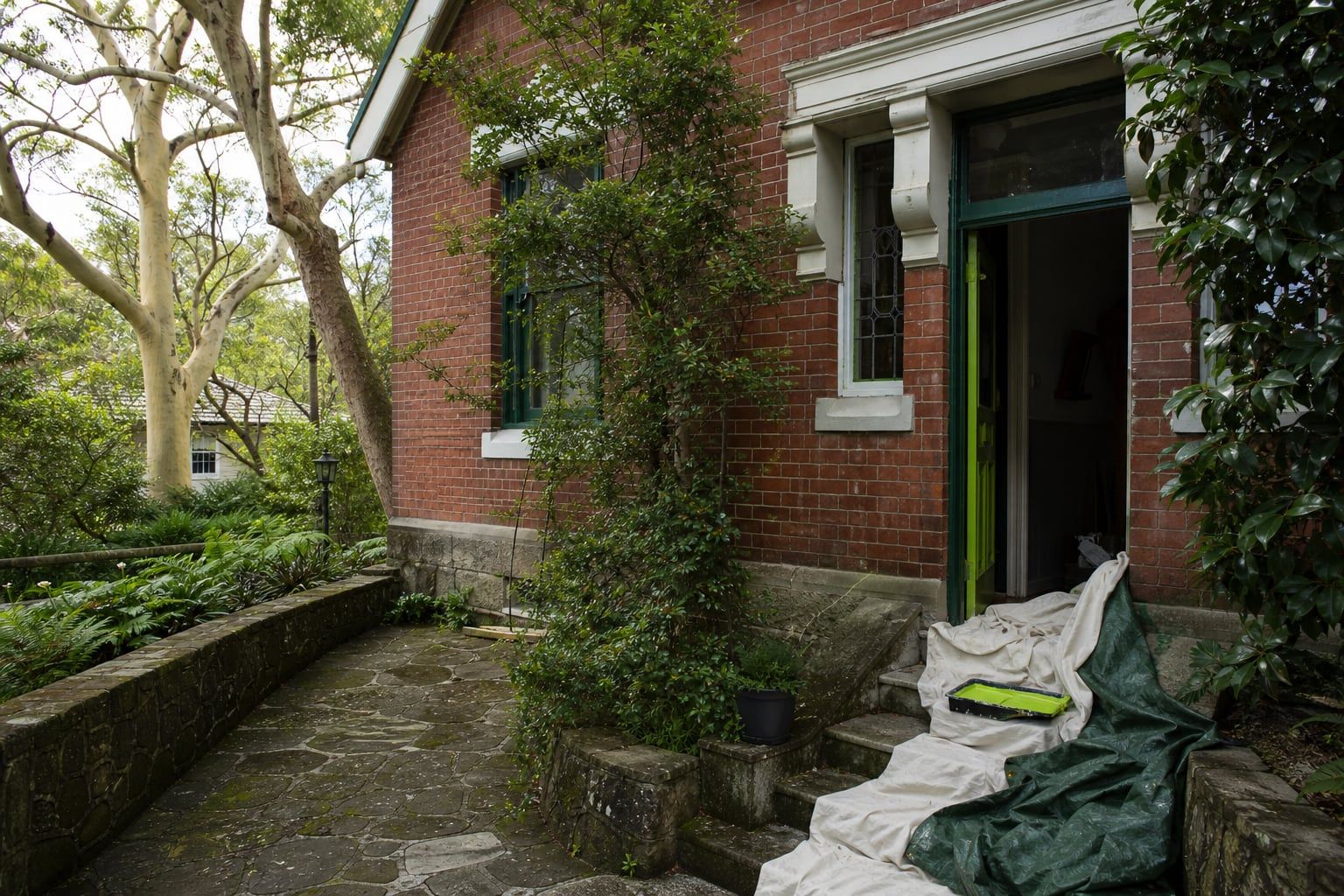
Mould Prevention across the North Shore
Mould Prevention on the North Shore: step by step
- SurveyReadings around the mould, plus gutters, drains, garden beds and the crawl space.
- Pin down the causeRising damp, shade, a broken pipe, a still subfloor or condensation.
- Repair itDrainage, airflow, a new damp course or a ventilation fix, as the survey showed.
- Stay ahead of itWe explain the simple upkeep that keeps a shady house dry.
Mould Prevention questions on the North Shore
Something else on your mind? Call 02 9158 9926 and ask.
Will you clean the mould?
No. We fix the moisture that lets mould grow. For cleaning or removal, use a cleaner or a mould remediation specialist; after the cause is fixed, their work holds.
Why is the mould always in the same corner?
That corner is staying damp: a wet wall, a leaking pipe or gutter nearby, cold air behind furniture, or damp rising from the subfloor. Find that and the mould stops.
Should I worry about my health?
NSW Health advises that damp and mould can affect breathing and worsen asthma and allergies. See your doctor if you're unwell; for the house, reducing dampness and improving airflow is the advice.