Damp Inspection North Shore
Know whether it's rising damp, shade, a broken pipe or a still subfloor before you spend anything.
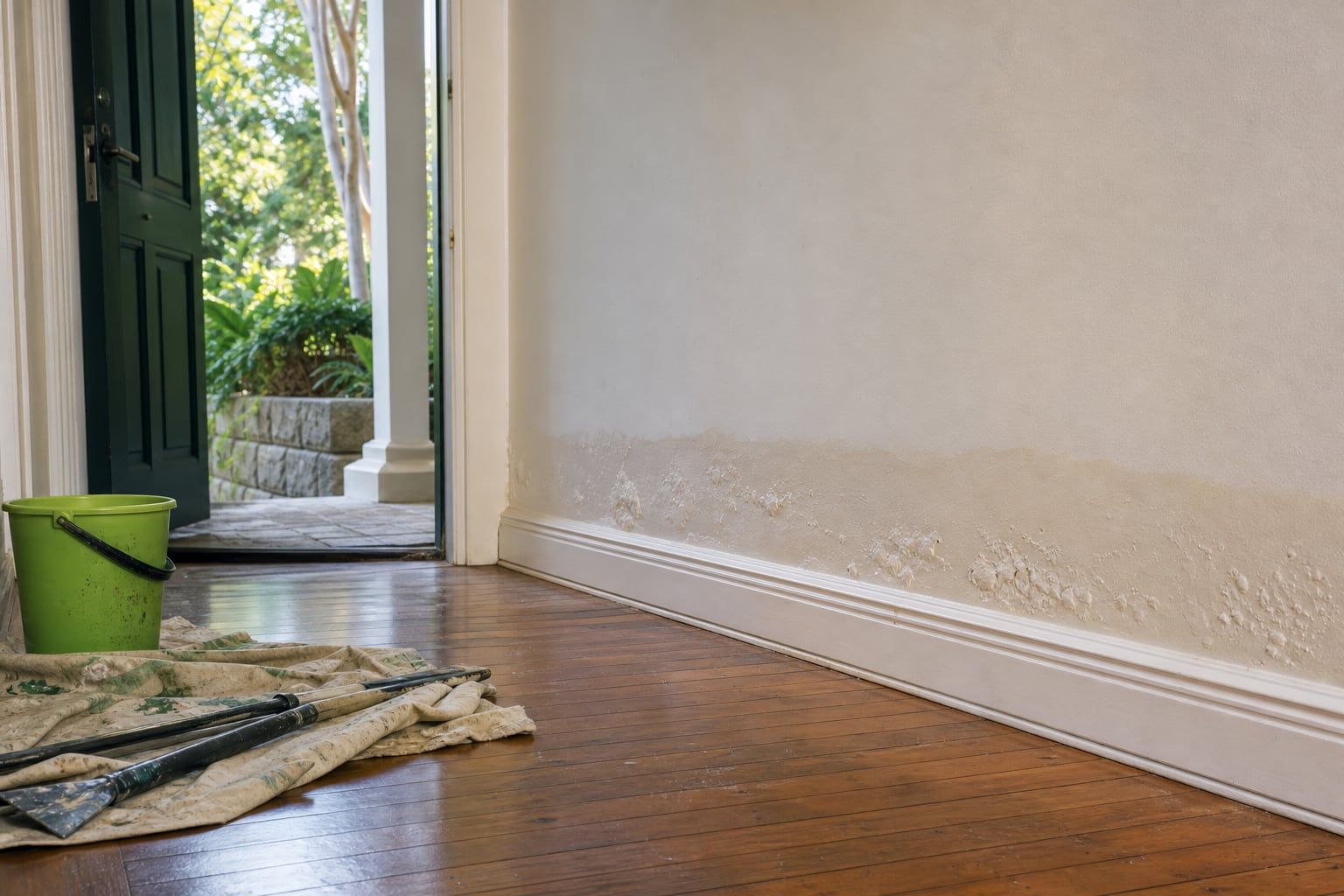
A damp inspection on the North Shore is mostly about telling apart four things that look the same on a wall: a failed century-old damp course, a shady wall that never dries, a stormwater pipe broken by tree roots, and a crawl space with no airflow. Every one of them blisters paint, leaves salt and makes a room smell musty. Only one of them needs a new damp course.
That’s why we survey first.
What the survey covers
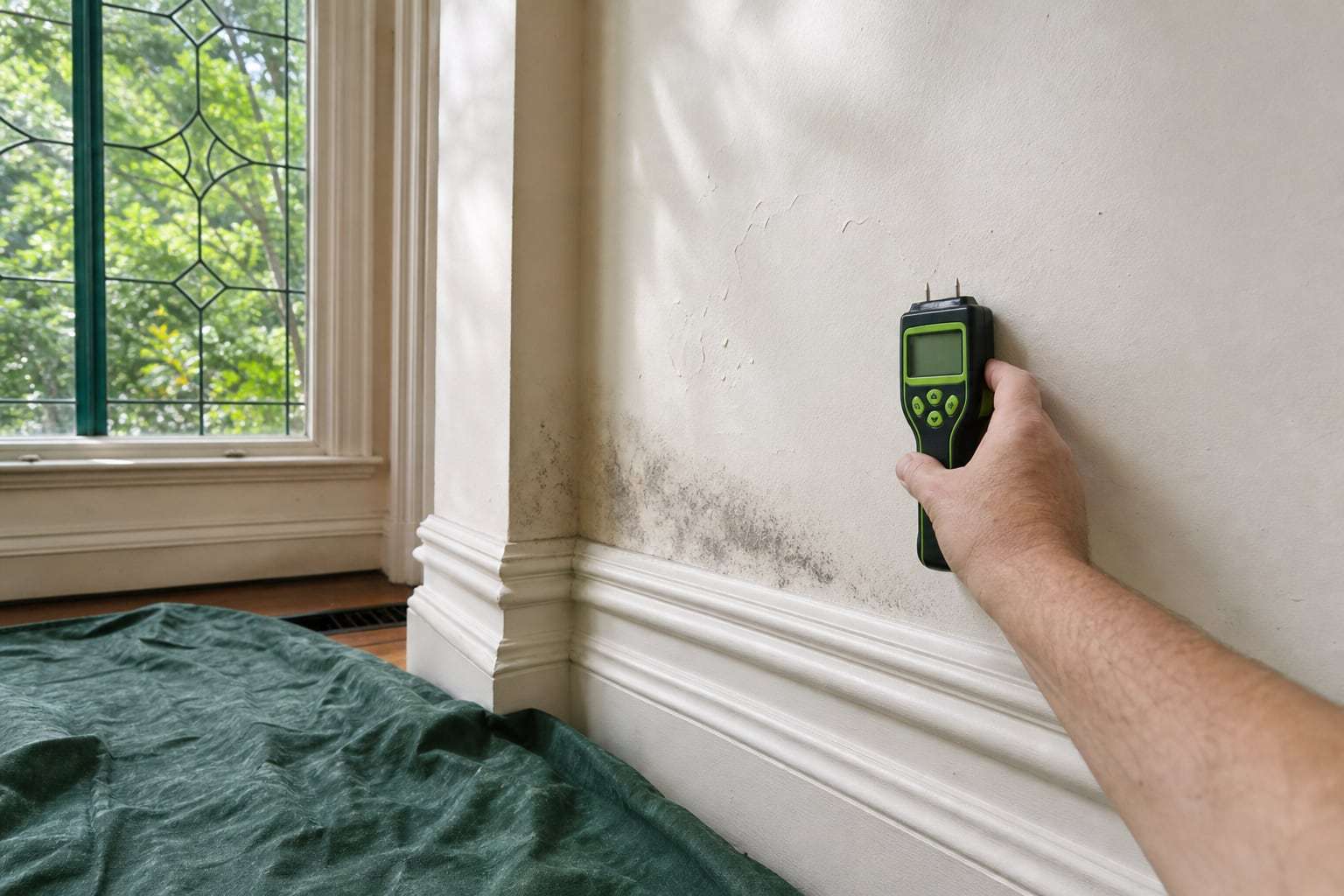
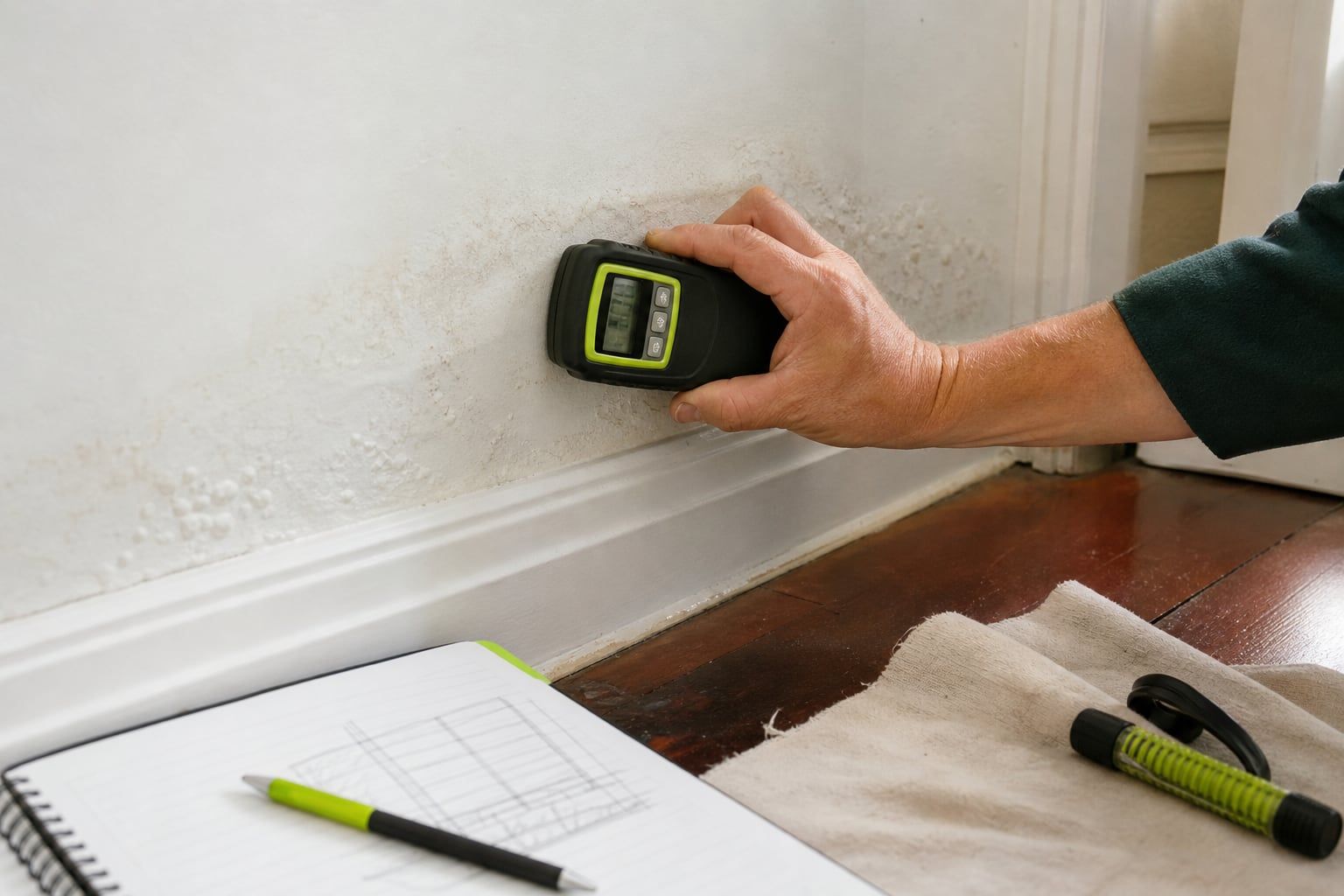
A grid of readings. We take readings across each affected wall, low and higher up, side to side, and map them. The shape tells the story. Rising damp forms a level band along the base that fades below about a metre. Damp from a broken pipe or a blocked gutter centres on one spot, usually near a downpipe or corner. Shade damp is worst on the south side and under the heaviest canopy.
Surface and depth. Salt in old lime plaster reads as moisture on a meter. Taking readings at depth separates a salty surface from a genuinely wet wall.
A salt test. The plaster is tested for salts, which shows whether water has been rising and evaporating for a long time.
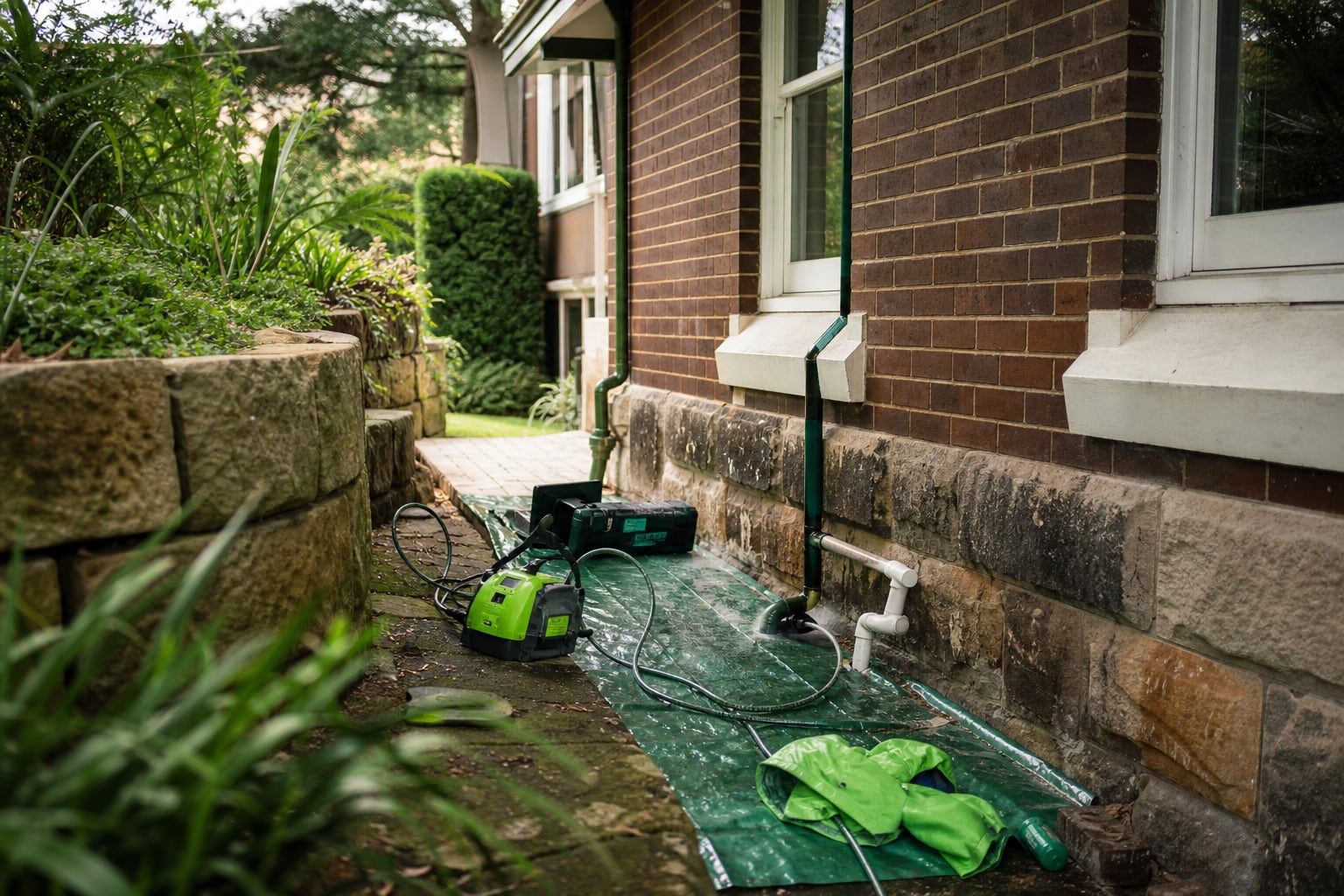
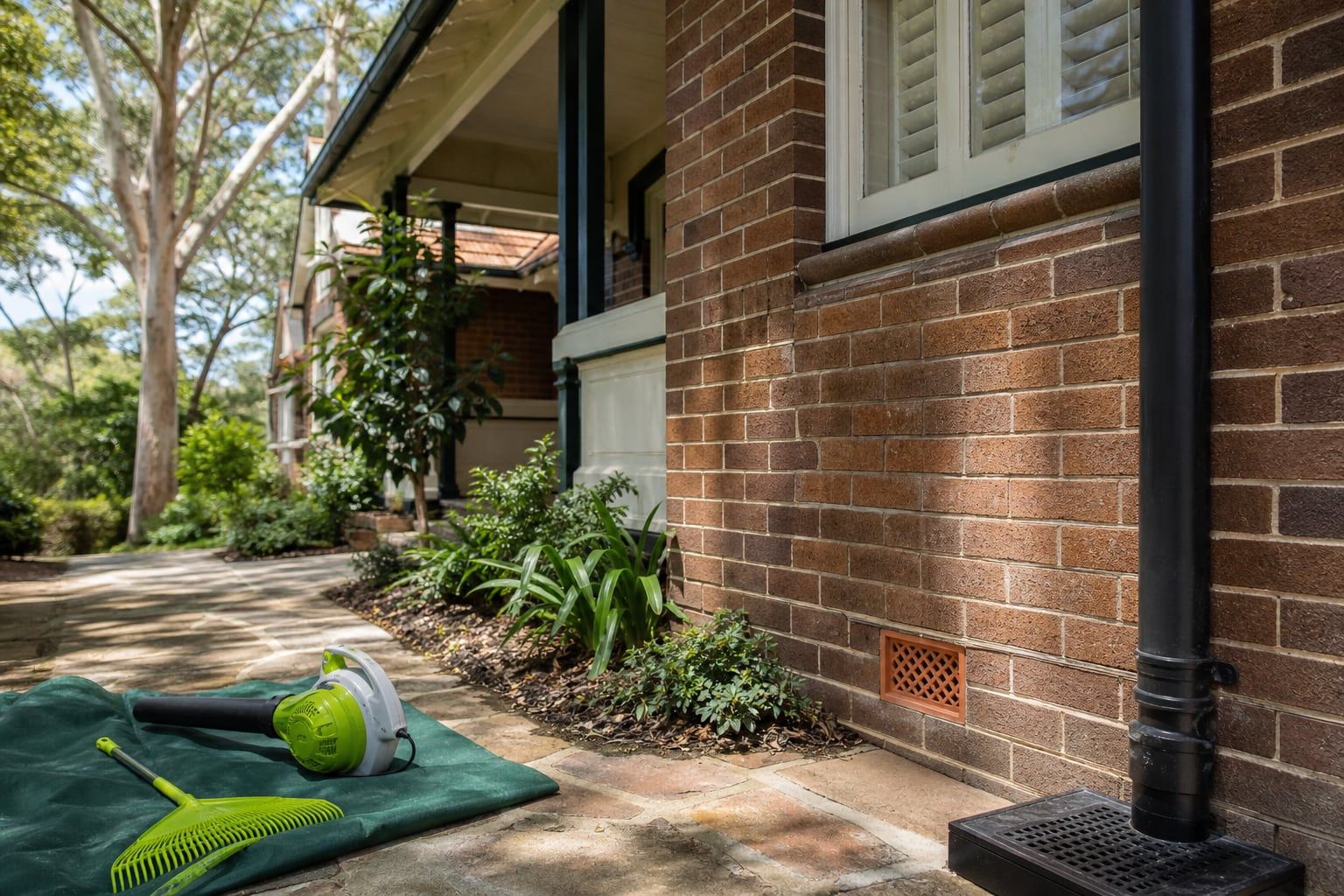
Gutters, downpipes and drains. Gum leaves block gutters and valleys, and roots crack old terracotta pipes. We check where every downpipe goes and whether water is pooling against the walls.
Garden beds and paths. Soil and paving built up over a Federation-era damp course let water straight past it.
The subfloor. We look at soil moisture, vents, and the moisture in the bearers and joists.
What you get
A plain explanation on the day: what’s wet, why, and what it would take to fix. If work is needed, a written quote follows that lists each wall, the method and the price, including the replastering.
Often part of the answer is cheap: clearing gutters, connecting a downpipe, lowering a garden bed or opening up covered vents. We’ll tell you when that’s enough.
Signs it’s time for a survey
- Paint bubbling or flaking along the skirtings.
- Front rooms that smell musty, especially in winter.
- Mould returning in corners, cupboards or behind furniture.
- Moss and green staining low on the shady side of the house.
- Old damp treatments that haven’t worked.
- You’re buying a period home and want to know what’s in the walls.
Why one reading isn’t enough
A single meter reading on a wall says very little. Old lime plaster holds salt that reads as water, shady walls read damp at the surface after any rain, and a wet patch near a downpipe can sit beside a perfectly dry wall. Mapping the whole wall, at the surface and deeper, and comparing it with what’s happening outside is what turns readings into a diagnosis you can rely on. It’s also what stops you paying for a damp course a house doesn’t need.
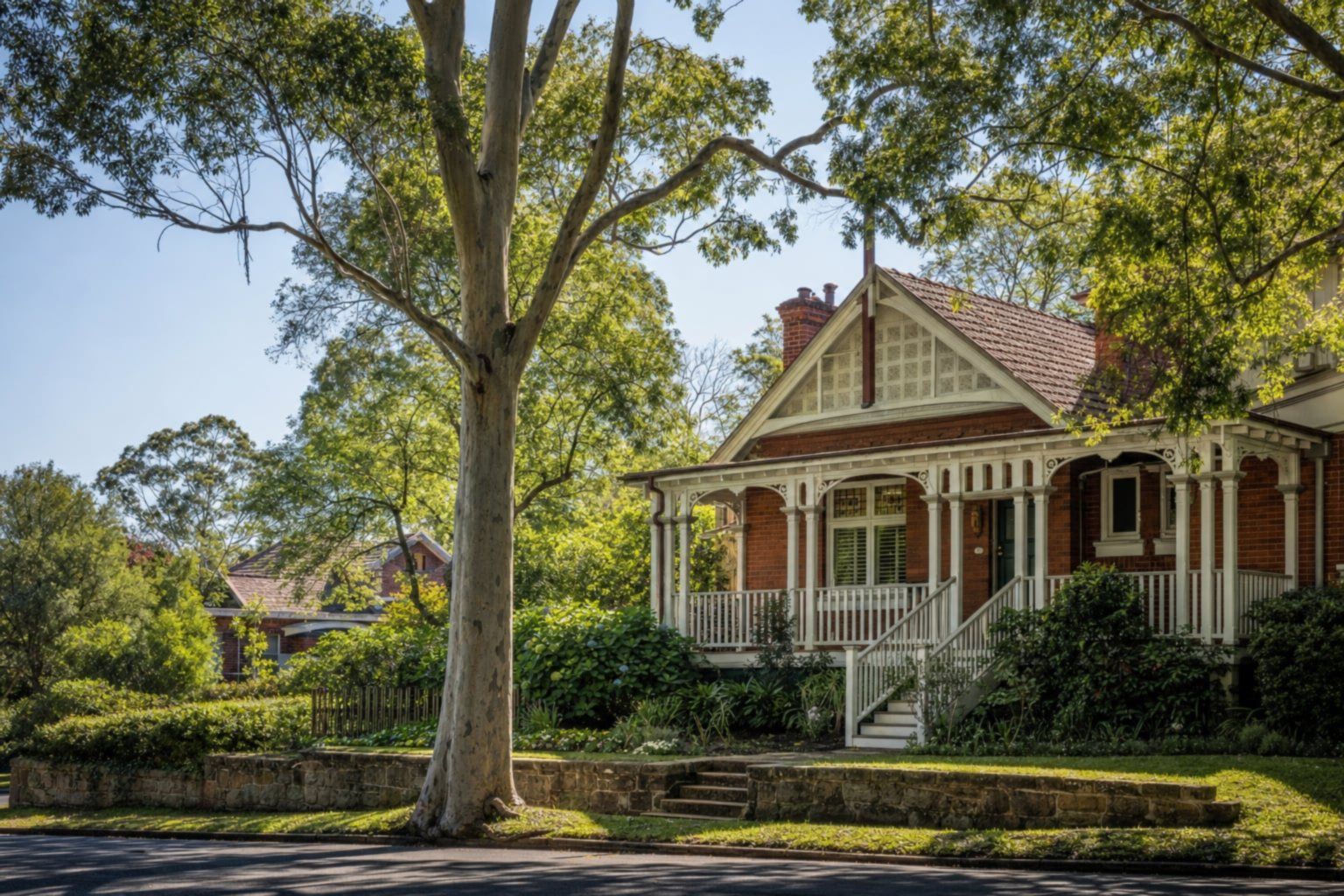
Heritage homes
In conservation areas we take care not to disturb original fabric during the survey. If work follows, our guide to rising damp in heritage conservation areas explains how we approach it.
Mould
If mould is what sent you looking, the survey still comes first. Mould grows where something keeps a surface damp; we find that something. Our page on mould prevention explains how we stop it coming back. We don’t clean mould ourselves.
Next steps
Where the survey shows true rising damp, our rising damp treatment page explains the repair. Where it’s trees, gutters and slope, our guide on shady blocks and damp walls covers what helps. Still deciding whether you have damp at all? See the rising damp symptoms page.
Updated
What good damp inspection looks like
Damp Inspection across the North Shore
Damp Inspection on the North Shore: step by step
- Arrange a visitUse the form to send your address, and a photo of the affected wall if you can.
- Map the wallsA grid of readings across each damp wall, surface and depth, with a salt test on the plaster.
- Walk the blockGutters and downpipes, garden beds, paths, tree roots near pipes, and the crawl space under the floor.
- Explain itYou hear the cause in plain terms on the day; a written quote follows if work is needed.
Damp Inspection questions on the North Shore
Something else on your mind? Call 02 9158 9926 and ask.
Do I pay for the survey?
No. The visit and readings are free, and you're under no obligation to go ahead.
Can you check a heritage house without damaging it?
Yes. Readings are taken with a meter on the surface and through existing joints where we need depth. Nothing is opened up without your say-so.
Will you tell me if it isn't rising damp?
Yes. On the North Shore it often isn't. Shade, blocked gutters and broken stormwater pipes are just as common, and we'll say so.